
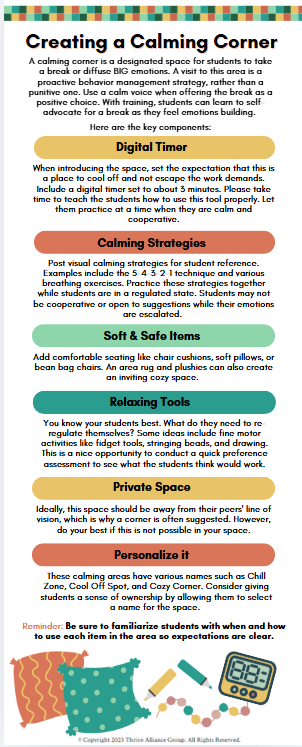
A Calming Center is a designated space for students to diffuse BIG emotions. The goal is for this to be a proactive behavior management strategy, rather than a punitive one. Familiarize students with calming objects (& reduce stigma) by rotating them through the area as you do with other learning centers.
Goal- When you observe the student's emotions simmering, offer the option to visit the area in a calm voice. With training and practice, students can learn to self-advocate for a break as their feelings build. While in the calming area, they use strategies to re-regulate their behavior. Then students are expected to resume classroom activities. Include the following items:
Digital timer- When introducing the space, set the expectation that this is a place to cool off and not avoid work. Using pre-set timers for 3-5 minutes will support this procedure. Let students practice turning it "on" while they are calm. Sand timers are often made of glass, which is why a digital timer is recommended.
Calming strategies- Post visual calming strategies and breathing exercises. You can download examples on the Calming Techniques page of this site. Please practice these strategies together while students are in a regulated state. Students are uncooperative and not open to suggestions while their emotions are escalated.
Soft & safe items- Include a cushion, soft pillow, or bean bag chair, as well as an area rug and plushies to create a cozy space.
Relaxing tools- What do your kiddos need to regulate themselves? Find examples on the Relaxing Tools page. See what works for your kiddos. Items can be stored in a bucket for easy placement or removal if needed.
Private space- Ideally, this space should be away from their peers' line of vision. A corner in the rear of the classroom is suggested.
Personalize it- These calming areas have various names such as Chill Zone, Cozy Corner, or Cool Off Spot. Consider giving students a sense of ownership by allowing them to select a name for the space.
Disclaimer: The above links are purely for educational purposes and are not intended as psychological interventions or as a substitute for psychological treatment. If you are in need of psychological help you should seek the consultation of a licensed mental health professional. Please note that the links may contain advertisements and linked videos and websites that are not endorsed by the school district.